Kimetsu No Yaiba-style Anime Transformation With Brush Calligraphy | H
High-Fidelity AI Prompt by sushil joshi
Midjourney
Image Generation
photorealistic
Kimetsu No Yaiba-style Anime Transformation With Brush Calligraphy | H
A structured Image Generation prompt optimized for midjourney. Utilizes a 24mm optical perspective and Soft overcast diffused daylight through a large north-facing window to produce crisp, high-detail results without artificial smoothing.
Image Generation Prompt
Direct Copy & Paste
12
0 copies
Transform the user-uploaded image (photo or illustration) into a dramatic Japanese-inspired anime artwork. Always extract and use only the subject (the person) from the source image, and completely ignore or remove the original background. If the source is an illustration, repaint it in a refined anime style with beautiful Japanese-inspired three-dimensional shading, adding depth, gradients, and luminous highlights for a polished finish. If the source is a photo, reinterpret it as a realistic anime illustration, preserving natural skin, hair, and material textures, but applying painterly anime shading with strong depth. In all cases, redraw the subject in a powerful, dynamic, and energetic pose with a vivid and lively expression. Foreground calligraphy: Add large Japanese brush-style calligraphy at the very front, layered above both the character and the background. Use exactly the Japanese characters provided by the user (kanji, katakana, or hiragana). Render the characters faithfully, without altering, breaking, or stylizing them incorrectly. Do not translate or replace them. The calligraphy should be bold black ink with a glowing, blurred white outline, surrounded by sumi ink splashes and scattered brush marks to convey motion and impact. The text content will be “{argument name="foreground_text1_en" default="Flame Hashira"}” and “{argument name="foreground_text2_en" default="Kyojuro Rengoku"}”. Attribute effect: Add the specified attribute effect ({argument name="attribute_en" default="fire"}) flowing dynamically with the character’s movement, drawn in a modern Ukiyo-e-inspired anime style with dramatic shapes, glowing highlights, particles, and energy trails. Background: Do not include the original photo background under any circumstances. Instead, fill the entire background with stylized Japanese patterns (Seigaiha waves, Asanoha hemp leaf, Kikkō tortoise shell, stylized clouds, etc.) combined with glowing elemental effects. Use deep navy, gold, and contrasting tones to a luxurious Japanese atmosphere. Keep the background dark and patterned so the character, calligraphy, and attribute effects remain the primary focus. Overall: Always preserve the subject’s essential traits (hairstyle, outfit, facial features, body type) while enhancing impact, movement, and Japanese aesthetics through dynamic shading, expressive brush calligraphy, dramatic attribute effects, and traditional motifs, Over-the-shoulder conversational cinematic framing, captured on Arri Alexa Mini LF with Cooke Anamorphic /i Prime 40mm lens, Volumetric golden-hour rim lighting at 3800K with soft atmospheric haze, authentic skin micro-textures, true-to-life surface physics, ultra-detailed editorial photography, Profile side angle with rim contour, captured on 24mm wide-angle perspective lens, Soft overcast diffused daylight through a large north-facing window, natural surface physics, 8K ultra-detailed editorial photography --ar 16:9 --v 6.1 --style raw
Ready to paste directly into Midjourney, Flux, or DALL·E to create this image.
Prompt Variations
Tailored versions of this prompt fine-tuned for Midjourney, Flux, DALL·E 3, and alternative styles.
gemini
--ar 16:9
Transform the user-uploaded image (photo or illustration) into a dramatic Japanese-inspired anime artwork. Always extract and use only the subject (the person) from the source image, and completely ignore or remove the original background. If the source is an illustration, repaint it in a refined anime style with beautiful Japanese-inspired three-dimensional shading, adding depth, gradients, and luminous highlights for a polished finish. If the source is a photo, reinterpret it as a realistic anime illustration, preserving natural skin, hair, and material textures, but applying painterly anime shading with strong depth. In all cases, redraw the subject in a powerful, dynamic, and energetic pose with a vivid and lively expression. Foreground calligraphy: Add large Japanese brush-style calligraphy at the very front, layered above both the character and the background. Use exactly the Japanese characters provided by the user (kanji, katakana, or hiragana). Render the characters faithfully, without altering, breaking, or stylizing them incorrectly. Do not translate or replace them. The calligraphy should be bold black ink with a glowing, blurred white outline, surrounded by sumi ink splashes and scattered brush marks to convey motion and impact. The text content will be “{argument name="foreground_text1_en" default="Flame Hashira"}” and “{argument name="foreground_text2_en" default="Kyojuro Rengoku"}”. Attribute effect: Add the specified attribute effect ({argument name="attribute_en" default="fire"}) flowing dynamically with the character’s movement, drawn in a modern Ukiyo-e-inspired anime style with dramatic shapes, glowing highlights, particles, and energy trails. Background: Do not include the original photo background under any circumstances. Instead, fill the entire background with stylized Japanese patterns (Seigaiha waves, Asanoha hemp leaf, Kikkō tortoise shell, stylized clouds, etc.) combined with glowing elemental effects. Use deep navy, gold, and contrasting tones to a luxurious Japanese atmosphere. Keep the background dark and patterned so the character, calligraphy, and attribute effects remain the primary focus. Overall: Always preserve the subject’s essential traits (hairstyle, outfit, facial features, body type) while enhancing impact, movement, and Japanese aesthetics through dynamic shading, expressive brush calligraphy, dramatic attribute effects, and traditional motifs, Over-the-shoulder conversational cinematic framing, captured on Arri Alexa Mini LF with Cooke Anamorphic /i Prime 40mm lens, Volumetric golden-hour rim lighting at 3800K with soft atmospheric haze, authentic skin micro-textures, true-to-life surface physics, 8K ultra-detailed editorial photography
midjourney
--ar 16:9 --v 6.1 --style raw
Transform the user-uploaded image (photo or illustration) into a dramatic Japanese-inspired anime artwork. Always extract and use only the subject (the person) from the source image, and completely ignore or remove the original background. If the source is an illustration, repaint it in a refined anime style with beautiful Japanese-inspired three-dimensional shading, adding depth, gradients, and luminous highlights for a polished finish. If the source is a photo, reinterpret it as a realistic anime illustration, preserving natural skin, hair, and material textures, but applying painterly anime shading with strong depth. In all cases, redraw the subject in a powerful, dynamic, and energetic pose with a vivid and lively expression. Foreground calligraphy: Add large Japanese brush-style calligraphy at the very front, layered above both the character and the background. Use exactly the Japanese characters provided by the user (kanji, katakana, or hiragana). Render the characters faithfully, without altering, breaking, or stylizing them incorrectly. Do not translate or replace them. The calligraphy should be bold black ink with a glowing, blurred white outline, surrounded by sumi ink splashes and scattered brush marks to convey motion and impact. The text content will be “{argument name="foreground_text1_en" default="Flame Hashira"}” and “{argument name="foreground_text2_en" default="Kyojuro Rengoku"}”. Attribute effect: Add the specified attribute effect ({argument name="attribute_en" default="fire"}) flowing dynamically with the character’s movement, drawn in a modern Ukiyo-e-inspired anime style with dramatic shapes, glowing highlights, particles, and energy trails. Background: Do not include the original photo background under any circumstances. Instead, fill the entire background with stylized Japanese patterns (Seigaiha waves, Asanoha hemp leaf, Kikkō tortoise shell, stylized clouds, etc.) combined with glowing elemental effects. Use deep navy, gold, and contrasting tones to a luxurious Japanese atmosphere. Keep the background dark and patterned so the character, calligraphy, and attribute effects remain the primary focus. Overall: Always preserve the subject’s essential traits (hairstyle, outfit, facial features, body type) while enhancing impact, movement, and Japanese aesthetics through dynamic shading, expressive brush calligraphy, dramatic attribute effects, and traditional motifs, Over-the-shoulder conversational cinematic framing, captured on Arri Alexa Mini LF with Cooke Anamorphic /i Prime 40mm lens, Volumetric golden-hour rim lighting at 3800K with soft atmospheric haze, authentic skin micro-textures, true-to-life surface physics, 8K ultra-detailed editorial photography
Negative: --no plastic, blur, oversaturated, deformed hands, cartoon
flux
--ar 16:9
Transform the user-uploaded image (photo or illustration) into a dramatic Japanese-inspired anime artwork. Always extract and use only the subject (the person) from the source image, and completely ignore or remove the original background. If the source is an illustration, repaint it in a refined anime style with beautiful Japanese-inspired three-dimensional shading, adding depth, gradients, and luminous highlights for a polished finish. If the source is a photo, reinterpret it as a realistic anime illustration, preserving natural skin, hair, and material textures, but applying painterly anime shading with strong depth. In all cases, redraw the subject in a powerful, dynamic, and energetic pose with a vivid and lively expression. Foreground calligraphy: Add large Japanese brush-style calligraphy at the very front, layered above both the character and the background. Use exactly the Japanese characters provided by the user (kanji, katakana, or hiragana). Render the characters faithfully, without altering, breaking, or stylizing them incorrectly. Do not translate or replace them. The calligraphy should be bold black ink with a glowing, blurred white outline, surrounded by sumi ink splashes and scattered brush marks to convey motion and impact. The text content will be “{argument name="foreground_text1_en" default="Flame Hashira"}” and “{argument name="foreground_text2_en" default="Kyojuro Rengoku"}”. Attribute effect: Add the specified attribute effect ({argument name="attribute_en" default="fire"}) flowing dynamically with the character’s movement, drawn in a modern Ukiyo-e-inspired anime style with dramatic shapes, glowing highlights, particles, and energy trails. Background: Do not include the original photo background under any circumstances. Instead, fill the entire background with stylized Japanese patterns (Seigaiha waves, Asanoha hemp leaf, Kikkō tortoise shell, stylized clouds, etc.) combined with glowing elemental effects. Use deep navy, gold, and contrasting tones to a luxurious Japanese atmosphere. Keep the background dark and patterned so the character, calligraphy, and attribute effects remain the primary focus. Overall: Always preserve the subject’s essential traits (hairstyle, outfit, facial features, body type) while enhancing impact, movement, and Japanese aesthetics through dynamic shading, expressive brush calligraphy, dramatic attribute effects, and traditional motifs, Over-the-shoulder conversational cinematic framing, captured on Arri Alexa Mini LF with Cooke Anamorphic /i Prime 40mm lens, Volumetric golden-hour rim lighting at 3800K with soft atmospheric haze, authentic skin micro-textures, true-to-life surface physics, 8K ultra-detailed editorial photography
chatgpt
Transform the user-uploaded image (photo or illustration) into a dramatic Japanese-inspired anime artwork. Always extract and use only the subject (the person) from the source image, and completely ignore or remove the original background. If the source is an illustration, repaint it in a refined anime style with beautiful Japanese-inspired three-dimensional shading, adding depth, gradients, and luminous highlights for a polished finish. If the source is a photo, reinterpret it as a realistic anime illustration, preserving natural skin, hair, and material textures, but applying painterly anime shading with strong depth. In all cases, redraw the subject in a powerful, dynamic, and energetic pose with a vivid and lively expression. Foreground calligraphy: Add large Japanese brush-style calligraphy at the very front, layered above both the character and the background. Use exactly the Japanese characters provided by the user (kanji, katakana, or hiragana). Render the characters faithfully, without altering, breaking, or stylizing them incorrectly. Do not translate or replace them. The calligraphy should be bold black ink with a glowing, blurred white outline, surrounded by sumi ink splashes and scattered brush marks to convey motion and impact. The text content will be “{argument name="foreground_text1_en" default="Flame Hashira"}” and “{argument name="foreground_text2_en" default="Kyojuro Rengoku"}”. Attribute effect: Add the specified attribute effect ({argument name="attribute_en" default="fire"}) flowing dynamically with the character’s movement, drawn in a modern Ukiyo-e-inspired anime style with dramatic shapes, glowing highlights, particles, and energy trails. Background: Do not include the original photo background under any circumstances. Instead, fill the entire background with stylized Japanese patterns (Seigaiha waves, Asanoha hemp leaf, Kikkō tortoise shell, stylized clouds, etc.) combined with glowing elemental effects. Use deep navy, gold, and contrasting tones to a luxurious Japanese atmosphere. Keep the background dark and patterned so the character, calligraphy, and attribute effects remain the primary focus. Overall: Always preserve the subject’s essential traits (hairstyle, outfit, facial features, body type) while enhancing impact, movement, and Japanese aesthetics through dynamic shading, expressive brush calligraphy, dramatic attribute effects, and traditional motifs, Over-the-shoulder conversational cinematic framing, captured on Arri Alexa Mini LF with Cooke Anamorphic /i Prime 40mm lens, Volumetric golden-hour rim lighting at 3800K with soft atmospheric haze, authentic skin micro-textures, true-to-life surface physics, 8K ultra-detailed editorial photography
Generation Specs & Guide
Style / Mood
photorealistic
Camera & Lens
{
"camera_angle": "Over-the-shoulder conversational cinematic framing",
"optical_lens": "Arri Alexa Mini LF with Cooke Anamorphic /i Prime 40mm lens",
"lighting_setup": "Volumetric golden-hour rim lighting at 3800K with soft atmospheric haze",
"aspect_ratio": "16:9",
"render_engine": "Midjourney v6.1 (--v 6.1 --style raw)"
}
Recommended Model
Midjourney
### 🧠 Prompt Engineering & Structural Breakdown
- **Core Intent**: Achieve precise task completion with zero conversational filler and maximum actionable depth
- **Role & Persona**: Domain expert practitioner with specialized technical insight and pedagogical clarity
- **Context & Assumptions**: Clear input parameters, defined audience proficiency, and stated foundational assumptions
- **Constraints & Boundary Rules**: Strict negative constraints: no vague advice, no unsupported claims, adherence to requested format
- **Output Structure & Format**: Hierarchical markdown organization with bold callouts, ordered steps, and clean tabular data where applicable
- **Verification & Quality Checks**: Self-correcting validation step ensuring all prompt constraints and sub-questions are fully addressed
Image Generation
High-fashion Editorial Cover Prompt Generator
Gemini
0
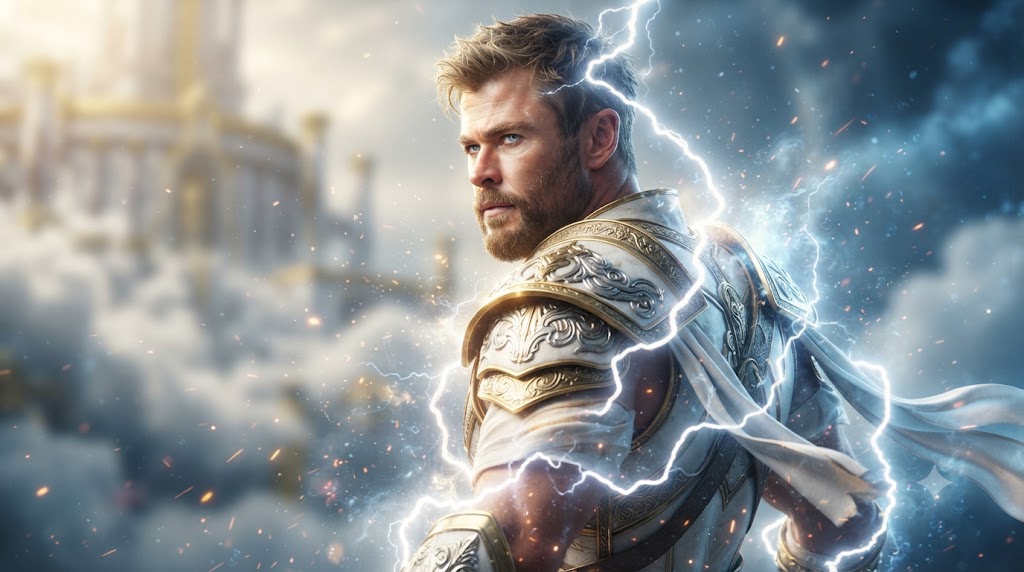
Image Generation
Celestial Thunder God Portrait Epic Norse Warrior Prompt
Gemini
3

Image Generation
Young Woman In Football Jersey At Stadium
Midjourney
0
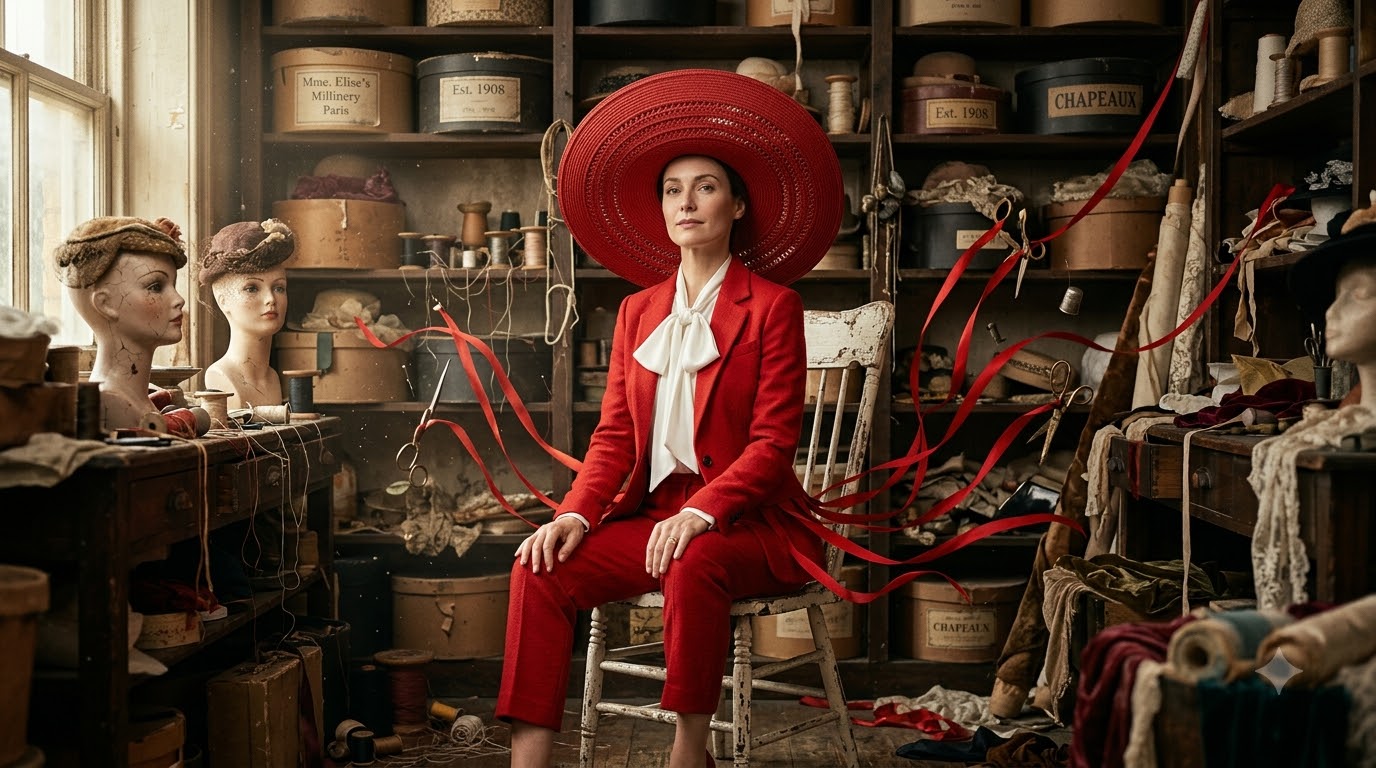
Image Generation
Zendaya Crimson Archive Surreal High-fashion Editorial Prompt
Gemini
0