Portal Scene Generation Prompt
High-Fidelity AI Prompt by sushil joshi
Gemini
Image Generation
photorealistic
Portal Scene Generation Prompt
Portal Scene Generation Prompt: Copy, customize, and execute this battle-tested Image Generation prompt on Midjourney. Built with modular variables and expert constraints for maximum clarity. (Focus: An oval-shaped glowing portal exists between the {argument name="real world scene" default="Fushimi ...)
Image Generation Prompt
Direct Copy & Paste
6
0 copies
An oval-shaped glowing portal exists between the {argument name="real world scene" default="Fushimi Inari Shrine"} and the {argument name="inner portal scene" default="A photorealistic, cinematic future city street illuminated by blue holograms and refracting neon lights."}. The {argument name="real world scene" default="Fushimi Inari Shrine"} extends outside the portal, depicted with realistic textures, a grounded atmosphere, and a rough, natural tone. The {argument name="inner portal scene" default="A photorealistic, cinematic future city street illuminated by blue holograms and refracting neon lights."} exists inside the portal, rendered in a completely photorealistic, live-action, and cinematic style. Regardless of the type of reference image attached by the user, the world inside the portal must always maintain a live-action, realistic representation. The {argument name="character in portal" default="Strictly based on the image attached by the user, without changing its media characteristics, expression format, or texture."} passes through the portal, gently pulling the viewer's hand. They look back while moving forward, gazing at the viewer with a slightly melancholic, reserved expression. Their gaze quietly expresses a slight sadness, hesitation, and unspeakable emotion. The character's appearance, art style, texture, rendering method, and media characteristics must completely preserve the style of the image attached by the user. - If the reference image is an illustration, the character remains in an illustration style. - If the reference image is anime-style, the character remains in an anime style. - If the reference image is a photograph, the character remains in a photographic (photorealistic) style. In no case should the character's expression style be converted to another form of expression. The portal emits a mysterious blue-purple light. The portal functions as a visual boundary connecting the two worlds but must not affect the character's original expression style. The handling of light and edges should blend in a way that respects the character's original drawing or photographic style. Optional overall visual style: {argument name="art style" default="Intentional contrast between the character expression derived from the attached image and the live-action world."} Camera angle: Third-person perspective. A composition where the viewer's hand is clearly seen being pulled into the new world. No blur. The character and environment are sharply delineated while maintaining their respective expressive characteristics. Aspect ratio: 2:3, Atmospheric 24mm wide street photography snapshot angle, captured on Arri Alexa Mini LF with Cooke Anamorphic /i Prime 40mm lens, Dramatic stage spotlighting with subtle airborne particulate illumination, authentic skin micro-textures, true-to-life surface physics, 8K ultra-detailed editorial photography --ar 16:9 --v 6.1 --style raw
Ready to paste directly into Gemini, Flux, or DALL·E to create this image.
Prompt Variations
Tailored versions of this prompt fine-tuned for Midjourney, Flux, DALL·E 3, and alternative styles.
midjourney
An oval-shaped glowing portal exists between the {argument name="real world scene" default="Fushimi Inari Shrine"} and the {argument name="inner portal scene" default="A photorealistic, cinematic future city street illuminated by blue holograms and refracting neon lights."}. The {argument name="real world scene" default="Fushimi Inari Shrine"} extends outside the portal, depicted with realistic textures, a grounded atmosphere, and a rough, natural tone. The {argument name="inner portal scene" default="A photorealistic, cinematic future city street illuminated by blue holograms and refracting neon lights."} exists inside the portal, rendered in a completely photorealistic, live-action, and cinematic style. Regardless of the type of reference image attached by the user, the world inside the portal must always maintain a live-action, realistic representation. The {argument name="character in portal" default="Strictly based on the image attached by the user, without changing its media characteristics, expression format, or texture."} passes through the portal, gently pulling the viewer's hand. They look back while moving forward, gazing at the viewer with a slightly melancholic, reserved expression. Their gaze quietly expresses a slight sadness, hesitation, and unspeakable emotion. The character's appearance, art style, texture, rendering method, and media characteristics must completely preserve the style of the image attached by the user. - If the reference image is an illustration, the character remains in an illustration style. - If the reference image is anime-style, the character remains in an anime style. - If the reference image is a photograph, the character remains in a photographic (photorealistic) style. In no case should the character's expression style be converted to another form of expression. The portal emits a mysterious blue-purple light. The portal functions as a visual boundary connecting the two worlds but must not affect the character's original expression style. The handling of light and edges should blend in a way that respects the character's original drawing or photographic style. Optional overall visual style: {argument name="art style" default="Intentional contrast between the character expression derived from the attached image and the live-action world."} Camera angle: Third-person perspective. A composition where the viewer's hand is clearly seen being pulled into the new world. No blur. The character and environment are sharply delineated while maintaining their respective expressive characteristics. Aspect ratio: 2:3, Atmospheric 24mm wide street photography snapshot angle, captured on Arri Alexa Mini LF with Cooke Anamorphic /i Prime 40mm lens, Dramatic stage spotlighting with subtle airborne particulate illumination, authentic skin micro-textures, true-to-life surface physics, 8K ultra-detailed editorial photography
gemini
An oval-shaped glowing portal exists between the {argument name="real world scene" default="Fushimi Inari Shrine"} and the {argument name="inner portal scene" default="A photorealistic, cinematic future city street illuminated by blue holograms and refracting neon lights."}. The {argument name="real world scene" default="Fushimi Inari Shrine"} extends outside the portal, depicted with realistic textures, a grounded atmosphere, and a rough, natural tone. The {argument name="inner portal scene" default="A photorealistic, cinematic future city street illuminated by blue holograms and refracting neon lights."} exists inside the portal, rendered in a completely photorealistic, live-action, and cinematic style. Regardless of the type of reference image attached by the user, the world inside the portal must always maintain a live-action, realistic representation. The {argument name="character in portal" default="Strictly based on the image attached by the user, without changing its media characteristics, expression format, or texture."} passes through the portal, gently pulling the viewer's hand. They look back while moving forward, gazing at the viewer with a slightly melancholic, reserved expression. Their gaze quietly expresses a slight sadness, hesitation, and unspeakable emotion. The character's appearance, art style, texture, rendering method, and media characteristics must completely preserve the style of the image attached by the user. - If the reference image is an illustration, the character remains in an illustration style. - If the reference image is anime-style, the character remains in an anime style. - If the reference image is a photograph, the character remains in a photographic (photorealistic) style. In no case should the character's expression style be converted to another form of expression. The portal emits a mysterious blue-purple light. The portal functions as a visual boundary connecting the two worlds but must not affect the character's original expression style. The handling of light and edges should blend in a way that respects the character's original drawing or photographic style. Optional overall visual style: {argument name="art style" default="Intentional contrast between the character expression derived from the attached image and the live-action world."} Camera angle: Third-person perspective. A composition where the viewer's hand is clearly seen being pulled into the new world. No blur. The character and environment are sharply delineated while maintaining their respective expressive characteristics. Aspect ratio: 2:3, Atmospheric 24mm wide street photography snapshot angle, captured on Arri Alexa Mini LF with Cooke Anamorphic /i Prime 40mm lens, Dramatic stage spotlighting with subtle airborne particulate illumination, authentic skin micro-textures, true-to-life surface physics, 8K ultra-detailed editorial photography
flux
An oval-shaped glowing portal exists between the {argument name="real world scene" default="Fushimi Inari Shrine"} and the {argument name="inner portal scene" default="A photorealistic, cinematic future city street illuminated by blue holograms and refracting neon lights."}. The {argument name="real world scene" default="Fushimi Inari Shrine"} extends outside the portal, depicted with realistic textures, a grounded atmosphere, and a rough, natural tone. The {argument name="inner portal scene" default="A photorealistic, cinematic future city street illuminated by blue holograms and refracting neon lights."} exists inside the portal, rendered in a completely photorealistic, live-action, and cinematic style. Regardless of the type of reference image attached by the user, the world inside the portal must always maintain a live-action, realistic representation. The {argument name="character in portal" default="Strictly based on the image attached by the user, without changing its media characteristics, expression format, or texture."} passes through the portal, gently pulling the viewer's hand. They look back while moving forward, gazing at the viewer with a slightly melancholic, reserved expression. Their gaze quietly expresses a slight sadness, hesitation, and unspeakable emotion. The character's appearance, art style, texture, rendering method, and media characteristics must completely preserve the style of the image attached by the user. - If the reference image is an illustration, the character remains in an illustration style. - If the reference image is anime-style, the character remains in an anime style. - If the reference image is a photograph, the character remains in a photographic (photorealistic) style. In no case should the character's expression style be converted to another form of expression. The portal emits a mysterious blue-purple light. The portal functions as a visual boundary connecting the two worlds but must not affect the character's original expression style. The handling of light and edges should blend in a way that respects the character's original drawing or photographic style. Optional overall visual style: {argument name="art style" default="Intentional contrast between the character expression derived from the attached image and the live-action world."} Camera angle: Third-person perspective. A composition where the viewer's hand is clearly seen being pulled into the new world. No blur. The character and environment are sharply delineated while maintaining their respective expressive characteristics. Aspect ratio: 2:3, Atmospheric 24mm wide street photography snapshot angle, captured on Arri Alexa Mini LF with Cooke Anamorphic /i Prime 40mm lens, Dramatic stage spotlighting with subtle airborne particulate illumination, authentic skin micro-textures, true-to-life surface physics, 8K ultra-detailed editorial photography
chatgpt
An oval-shaped glowing portal exists between the {argument name="real world scene" default="Fushimi Inari Shrine"} and the {argument name="inner portal scene" default="A photorealistic, cinematic future city street illuminated by blue holograms and refracting neon lights."}. The {argument name="real world scene" default="Fushimi Inari Shrine"} extends outside the portal, depicted with realistic textures, a grounded atmosphere, and a rough, natural tone. The {argument name="inner portal scene" default="A photorealistic, cinematic future city street illuminated by blue holograms and refracting neon lights."} exists inside the portal, rendered in a completely photorealistic, live-action, and cinematic style. Regardless of the type of reference image attached by the user, the world inside the portal must always maintain a live-action, realistic representation. The {argument name="character in portal" default="Strictly based on the image attached by the user, without changing its media characteristics, expression format, or texture."} passes through the portal, gently pulling the viewer's hand. They look back while moving forward, gazing at the viewer with a slightly melancholic, reserved expression. Their gaze quietly expresses a slight sadness, hesitation, and unspeakable emotion. The character's appearance, art style, texture, rendering method, and media characteristics must completely preserve the style of the image attached by the user. - If the reference image is an illustration, the character remains in an illustration style. - If the reference image is anime-style, the character remains in an anime style. - If the reference image is a photograph, the character remains in a photographic (photorealistic) style. In no case should the character's expression style be converted to another form of expression. The portal emits a mysterious blue-purple light. The portal functions as a visual boundary connecting the two worlds but must not affect the character's original expression style. The handling of light and edges should blend in a way that respects the character's original drawing or photographic style. Optional overall visual style: {argument name="art style" default="Intentional contrast between the character expression derived from the attached image and the live-action world."} Camera angle: Third-person perspective. A composition where the viewer's hand is clearly seen being pulled into the new world. No blur. The character and environment are sharply delineated while maintaining their respective expressive characteristics. Aspect ratio: 2:3, Atmospheric 24mm wide street photography snapshot angle, captured on Arri Alexa Mini LF with Cooke Anamorphic /i Prime 40mm lens, Dramatic stage spotlighting with subtle airborne particulate illumination, authentic skin micro-textures, true-to-life surface physics, 8K ultra-detailed editorial photography
Generation Specs & Guide
Style / Mood
photorealistic
Camera & Lens
{
"camera_angle": "Atmospheric 24mm wide street photography snapshot angle",
"optical_lens": "Arri Alexa Mini LF with Cooke Anamorphic /i Prime 40mm lens",
"lighting_setup": "Dramatic stage spotlighting with subtle airborne particulate illumination",
"aspect_ratio": "16:9",
"render_engine": "Midjourney v6.1 (--v 6.1 --style raw)"
}
Recommended Model
Gemini
### 🧠 Prompt Engineering & Structural Breakdown
- **Core Intent**: Achieve precise task completion with zero conversational filler and maximum actionable depth
- **Role & Persona**: Domain expert practitioner with specialized technical insight and pedagogical clarity
- **Context & Assumptions**: Clear input parameters, defined audience proficiency, and stated foundational assumptions
- **Constraints & Boundary Rules**: Strict negative constraints: no vague advice, no unsupported claims, adherence to requested format
- **Output Structure & Format**: Hierarchical markdown organization with bold callouts, ordered steps, and clean tabular data where applicable
- **Verification & Quality Checks**: Self-correcting validation step ensuring all prompt constraints and sub-questions are fully addressed
Image Generation
High-fashion Editorial Cover Prompt Generator
Gemini
0

Image Generation
Celestial Thunder God Portrait Epic Norse Warrior Prompt
Gemini
3

Image Generation
Young Woman In Football Jersey At Stadium
Midjourney
0
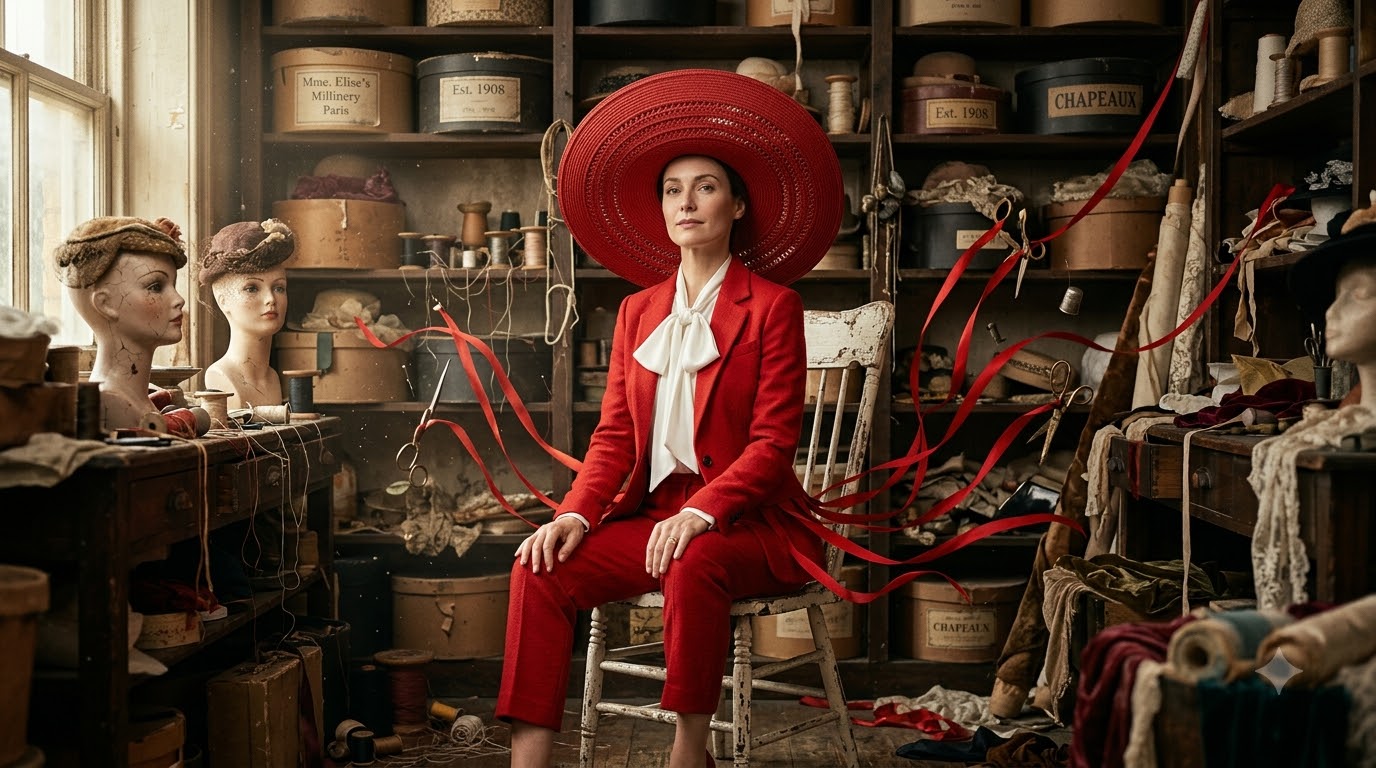
Image Generation
Zendaya Crimson Archive Surreal High-fashion Editorial Prompt
Gemini
0